Contact

AI-volution | The unfolding story

AI-volution | The unfolding story

Recent breakthroughs, such as the advent of Generative AI tools herald a new era set to rival the impact that personal computers, the internet, and smartphones had on our lives.

This wave of innovation has the potential to propel industries forward at a pace, promising to revolutionize the way businesses operate. Tasks, once mundane, are being automated, insights are generated with greater precision, and decision-making is reaching new heights of sophistication. At the same time, AI is opening up fresh avenues of growth, sparking product and service innovations, redefining value propositions and driving operational efficiencies.

One fundamental theme, something that has been consistent across all of our research, remains the importance of the human touch. As the story unfolds, AI’s true power lies in its ability to complement and enhance human capabilities, accelerating progress and efficiency, and delivering higher quality end products and experiences. Firms are actively harnessing AI and related capabilities fueling a surge in M&A activity, as they strive to gain an edge in an increasingly digital economy.

Our report is designed to identify key themes arising from AI developments and their subsequent impact on businesses and M&A
across the following sectors:

We look forward to continuing the conversation as the story unfolds. In the meantime, if you have any queries or would like to have an in depth discussion on this topic or the broader market contact us

Value Creation with AI – Productivity vs. Growth

Value Creation with AI – Productivity vs. Growth

JEGI LEONIS’s 20th Annual Media & Technology Conference in New York City brought together senior executives and investors from across the global media, marketing, information, and technology sectors.

At the conference, Philipp Mueller, Chief Analyst & Product Officer of Outsell moderated a panel titled, “Value Creation with AI – Productivity vs. Growth.” 

The panel featured Sejal Amin, Chief Technology Officer of Shutterstock, Nikesh Kalra, Chief Operating Officer of DeepMedia, and Ilya Meyzin, SVP, Head of Data Science at Dun & Bradstreet.

The discussion kicked off with Philipp reminding the audience that ChatGPT was only launched 15 months ago. While there has been time to understand what real value creation with AI can look like, achieving it still remains elusive for a lot of companies. He continued by sharing findings from a survey conducted by Outsell in Q3 2023 that revealed that over 80% of senior executives were experimenting with Gen AI, with a third feeling very confident that it would drive productivity improvements in their enterprises. However, nearly half of the respondents lacked confidence in the ROI of their AI investments, with only 10% anticipating revenue and growth.

A lot has happened since ChatGPT was launched nearly 15 months ago.

Philipp Mueller, Chief Analyst & Product Officer of Outsell

The Impact of Generative AI on Productivity

Gen AI’s impact on productivity was the first area of discussion with the panelists.

Sejal Amin elaborated on Shutterstock’s utilization of Gen AI to enhance productivity across their operations by improving customer experience through actionable insights to their customer and sales teams, optimizing developer workflows, and bolstering infrastructure security.

Ilya Meyzin, added that Dun & Bradstreet had been employing LLMS for several years (large language models) to improve data quality, ingest data, and generate new types of insights.

The Issue of Trust and Safety with Gen AI

As Gen AI adoption increases, concerns regarding trust and safety become more acute.

Nikesh Kalra from DeepMedia discussed AI’s role in helping trust & safety teams combat nefarious content, which he quoted is now a $20bn market. 

Adopting Gen AI solutions from the third quarter of last year, Ilya from Dun & Bradstreet, emphasized the importance of addressing biases and hallucinations in AI, implementing rigorous data governance practices, and most importantly, using trusted and validated data.

Gen AI models are amazing, but many of the leading models are trained on the entirety of the internet, and the internet is a Data Frankenstein.

Ilya Meyzin, SVP, Head of Data Science at Dun & Bradstreet

Shutterstock has been using AI well before Gen AI became the norm, explained Sejal, to understand the users and meet their needs through personalized search, recommendation engines and content discovery tools. With the growth of AI usage within their business, they had increased their trust and ethics practices.

Nikesh Kalra reminded the audience that generated content was not just gathered from social media, but also from Zoom calls and across other platforms. With even the larger news and information services now turning to user generated content from sources like TikTok, he spoke about a move towards greater investment in the authentication of the data supply chain.

Trust is ultimately all we really have to run a company, country, and the world on. Authenticating the supply chain of news, information, and data, is more important than it has ever been before.

Nikesh Kalra, Chief Operating Officer of DeepMedia

Licensing and Growth resulting from Generative AI

The conversation shifted to the potential to drive revenue and growth through Gen AI.

Dun & Bradstreet is navigating the delicate balance between licensing proprietary data and protecting market competitiveness, carefully weighing the revenue upside with strategic threats. Meanwhile, Shutterstock capitalized on its immense repository of assets through partnerships with Gen AI hyperscalers, resulting in their first deal with OpenAI in 2022. Sejal Amin, however, noted a shift in demand towards tailoring smaller data sets for more conversive models.

We have to understand the user and their needs because that is the core of everything we do… As we sell our data, keeping models clean is a huge part of the responsibility we have.

Sejal Amin, Chief Technology Officer of Shutterstock

What’s in store for Generative AI in 2024? 

Finally, the panelists speculated on what the biggest development in AI would be in 2024.

For Nikesh Kalra it was the weaponizing of AI during the perfect storm of global elections, virality of social media, and the adoption of AI on a massive scale. Both Ilya Meyzin and Sejal Amin envisioned that the “rubber will hit the road” on Gen AI with worldwide enterprise adoption of it. Ilya also highlighted that in 2024 the emphasis on guardrails – LLM safety controls and protocols – will become increasingly important.

In conclusion, the discussion emphasized the potential of Gen AI to drive value, productivity, and growth, alongside the imperative of addressing the challenges of risk and governance for all.

For more information about our conference please click here.

Flywheel: The Global Vision for E-commerce

Flywheel: The Global Vision for E-commerce

JEGI LEONIS’s 20th Annual Media & Technology Conference in New York City brought together senior executives and investors from across the global media, marketing, information, and technology sectors.

The Conference finished on a high with a captivating session featuring Wilma Jordan, Founder and CEO, North America of JEGI, in conversation with Duncan Painter, Chief Executive Officer of Flywheel, in a session titled, Flywheel: The Global Vision for E-commerce.

Stellar track record of build and sell

Wilma began by introducing Duncan, highlighting his stellar track record of building and selling businesses with achievements including a $848m deal for WGSN with private equity Apax Partners and the sale of Flywheel Digital to Omnicom for $835m. Duncan shared insights from his career, from founding consumer intelligence provider ClarityBlue, to navigating the challenges of transforming Emap from a company with zero market value through an IPO, generating a 1.5x return.

My first 180-day plan at Emap was just to stop us having to hand the keys back… stopping us going bankrupt was basically the mission.

Omnicom’s purchase of Flywheel

Transitioning to Duncan’s current role within Omnicom, the conversation turned towards retail marketplaces as a pivotable force shaping the digital landscape, and the impact they will have on the consumer orientated purchase industry. Duncan highlighted the seismic changes looming and cited John Wren, Omnicom’s Group CEO, for his foresight in positioning the organization at the forefront of change with the purchase of Flywheel.

Future of E-commerce

The discussion naturally progressed to Duncan’s perspectives on the evolving landscape of e-commerce and the future of retail.

The retail market, including retail marketplaces and retail media, is poised to undergo significant changes in the digital industry. This shift is often misunderstood, yet it represents the next major transformation in the field.

Duncan emphasized the dynamic nature of retail markets, comparing them to the stock market. He highlighted that the role of first party data is one part of the change but emphasized that the most significant element will be the provision, for the first time ever, of direct-to-consumer capabilities at mass scale with a real time view of trading across all environments. He quoted staggering statistics demonstrating Flywheel’s influence across global marketplaces with ownership of 50% of the top consumer packaged goods (CPG), 6,000 clients that use their platforms across 29 countries globally.

Throughout the day, our systems and teams constantly monitor trading activities across all our platforms in real time. The gross merchandise value (GMV) we influence amounts to hundreds of billions.

He continued by explaining that when they started to build Flywheel in 2015, they realized that they had to be inside the walled gardens of the marketplaces, building and leveraging capability for their brands. This approach not only allows the manufacturer to meet, and sell to their customers directly, but to know how every single US$ spent performs, allowing for pure retail optimization.

The future of bricks and mortar retail

With this retail trajectory, Duncan predicted that there will still be physical stores in 20-30 years, however they will be transformed into warehouses for collection rather than for customer facing retail space. With online retail sales expected to meet 40% of market share by next year and grow to 60-70% in the next five years, Duncan stressed the importance of a digital first approach, particularly as Generation Alpha had already reached 97% digital engagement.

If you aren’t a digitally enabled and digital first business, able to leverage and in a world where marketplaces will be the norm, then you are not really prepared for this 10-15 year wave.

The role of humans in future retail

Wilma inquired about the impact of digital retail on the retail workforce in the next 10 years with Duncan explaining a shift towards a more dynamic approach, where retailers would need to be “hedge fund managers rather than portfolio managers”. He explained that last year 70% of net growth on marketplaces within Amazon in the US came from direct brands from China trading directly, selling to the US population. He warned that Western retailers need to rethink their sales strategies to remain competitive against East Asian retailers whose P&Ls don’t include high salaried product, sales, and marketing directors, and therefore having the ability to invest in optimizing their products on retail marketplaces.

The current global landscape is undergoing significant changes. Traditional barriers to building, creating, and selling are diminishing, while economic models are evolving rapidly, facilitated by the rise of global marketplaces. This transformation is occurring so swiftly that many organizations have not fully grasped the implications of these shifts.

The rise of retail media

With the retail media market growing 100% year on year, even before optimization is realized, Duncan believed it will become the largest retail platform, boasting unparalleled attribution capabilities, “for the first time ever attribution is pure.” He underscored its transformative potential in advertising effectiveness and revenue generation, particularly evident in Amazon’s revenue streams.

For more information about our conference please click here.

Media & Technology Conference | Key Takeaways

Media & Technology Conference | Key Takeaways

Our 20th Annual Media & Technology Conference was a preeminent, must-attend event for senior executives across the media, marketing, information and technology sectors.  Attendees heard intimate discussions from an array of world class business leaders and executives who shared their experiences managing through today’s fast-paced and rapidly evolving landscape as well as their strategies for success in the year ahead. Nearly 600 attendees joined us with a mixture of world-class founders and entrepreneurs, C-level executives and senior investment leaders creating an energized, vibrant and positive atmosphere once more.

Some of our key takeaways from the day include the following:

As we head into the Spring of 2024 the entrepreneurial spirit of the Founders we have worked with over the years has never been more apparent as companies have emerged from the pandemic with reimagined business models and an eye towards a future that brings both promise and uncertainty.

Human capital and board level cohesion has never been more important to a company’s long-term success.

AI is seen as a disruptive and transformative force of nature across the tech enabled services landscape. Early adoption of this technology is not an option; rapid yet responsible deployment of a test and learn approach is widely seen as the optimal path forward. The complexity and variety of use cases for the technology creates opportunities for consultancies and digital transformation strategists who will chart the path forward.

Data is the fuel that drives innovation. First party data in a post cookie and privacy constrained world is essential. A major shift in power is underway between media companies and retailers as purchase data creates leverage with brand marketers and product manufacturers.

Retail Media has emerged as the hottest subsector in digital and opens the door to a more direct customer and retailer relationship. Omnicom’s recent $850M acquisition of Flywheel, a retail services platform, demonstrates this shift as well as the proliferation of Retail Media Networks that have taken market share in the past year. Walmart’s recent bid for Vizio, a CTV manufacturer with a media business is also a sign of retail’s aggressive move into media.

The transformation of B2B is well underway resulting in the integration of customer touchpoints across the discover, learn, and buy continuum. Technology drives mass personalization, content engages and educates, and experiences provide amplification when integrated into the journey.

Google, Facebook, and Amazon dominate the digital media ecosystem, commanding 65% of digital spend in the U.S. The open market now represents about $14B in digital spend. CTV, online video, and YouTube combined represents $63B (now larger than the $60B linear broadcast market) and growing at a 20% CAGR. Building a business outside these walled gardens can be very difficult, but building capabilities inside them can be very rewarding.

M&A transactions can be complex and unpredictable but one important factor to be thinking about is “data readiness”; the idea here is to understand that a significant portion of your company’s value is determined by the strength of your business metrics, which includes: KPI’s, benchmarks, and of course financials.

Understanding how buyers value your business beyond the bottom-line and well in advance will always pay dividends down the road when it comes time to transact.

In the face of global crises, organizations have honed their crisis management skills adeptly but have neglected long-term strategic planning. Employees want inspiration, clarity regarding the company’s direction, transparency in its journey, and recognition of their contributions. These factors are managed differently when dealing with crises such as Covid. It is crucial to think about how to get back to a long-term strategic planning mindset.

In the era of Gen AI, the technology itself is not a barrier; the critical consideration lies in identifying which problems that technology can address effectively. It is important to be deliberate in selecting the appropriate applications for this technology.

The Corporate Transparency Act, which went into effect on January 1st of this year, requires entities formed by filings with Secretaries of State to submit beneficial ownership information to the Department of Treasury’s Financial Crimes Enforcement Network. Exemptions apply to 23 types of entities. However, many exemptions are far from straightforward in their drafting and application. Some examples of exemptions are employee headcount threshold and revenue threshold. This Act should be on all companies’ radars going forward.

Private Equity investors are hungry for deals based on prolonged holding periods for many portfolios. While JEGI LEONIS has executed over 25 deals in the last 15 months, there has been a dearth of deal flow in many sectors.

M&A activity has been markedly down over the last year, primarily attributed to difficult macro-economic conditions, geopolitical uncertainty, a slowdown in tech investments and valuations and a challenging bid ask spread between buyer and seller. Companies that have managed to maintain revenues and/or grow over the last year are in a fantastic position to stand out in a supply-constrained market.

Private Equity and Strategics have scaled up sourcing efforts in an attempt to identify targets, Founders should anticipate a ton of inbound in advance of an active Spring to Summer M&A market. The time value of money and pressure from LP’s will contribute to some harvesting of portfolio gains this year and perhaps reset valuations for the coming year. Net net, there’s a window of opportunity ahead for sellers and buyers alike.

To learn more about our 2024 conference, please visit here. If you have any other questions about our conference, please contact us.


International Women’s Day

International Women’s Day #inspireinclusion

International Women’s Day (IWD) is a global day celebrating the social, economic, cultural and political achievements of women. The day also marks a call to action for accelerating gender parity and significant activity is witnessed worldwide as groups come together to celebrate women’s achievements or rally for women’s equality.

International Women’s Day (IWD) provides a key opportunity for organizations worldwide to reinforce and amplify their ongoing commitment to Diversity, Equity and Inclusion through actively forging women’s advancement. 

By championing inclusion, we at JEGI LEONIS harness the full potential of diverse perspectives.

International Women’s Day provides an important opportunity to fundraise for female-focused charities, help raise their visibility, and amplify awareness raising efforts. If you would like to find out more, please click here.

Media & Technology Conference

Media & Technology Conference

Location:  The Pierre: 2 East 61st Street at Fifth Avenue, New York, NY 10065

The 20th Anniversary Event
Two Decades of Exceptional Evolution

Our 20th annual Media & Technology Conference was a preeminent, can’t-miss event for nearly 600 senior executives across the media, marketing, information and technology sectors.

The theme of the conference this year was Two Decades of Exceptional Evolution. Attendees heard intimate discussions from an array of world class leaders and executives who shared their experiences managing through today’s fast-paced and rapidly evolving landscape as well as their strategies for success in the year ahead.

2024 Conference Materials

2024 Conference Speakers

Sejal Amin, Chief Technology Officer | Shutterstock

Keia Clarke, Chief Executive Officer | New York Liberty

Laura Correnti, Founder & CEO | Deep Blue Sports + Entertainment

Elizabeth Deeming, Chief Executive Officer | MVF

Bob Dethlefs, Founder & Former CEO | Evanta; Chairman | CyberRisk Alliance

Robert Dickey, Partner | Morgan Lewis

Patrick Donoghue, National Managing Principal, Corporate Finance & Transaction Advisory Services; Private Equity Industry Leader | BDO

Kerry Gumas, Founder & CEO | Metacomet Advisors

Heather Holst-Knudsen, Founder & CEO | H2K Labs

Nikesh Kalra, Chief Operating Officer | DeepMedia

Doug Manoni, Founder & CEO | CyberRisk Alliance

Philipp Mueller, Chief Analyst & Product Officer | Outsell

Ilya Meyzin, Head of Data Science | Dun & Bradstreet

Duncan Painter, Chief Executive Officer | Flywheel

Scott Peters, Co-Founder & Managing Partner | Growth Catalyst Partners

Gemma Postlethwaite, Chief Executive Officer | GLG

John Rose, Managing Director & Senior Partner | Boston Consulting Group

Breanna Stewart, Power Forward for the NY Liberty, 2x WNBA Champion, 2x Olympic Gold Medalist, 2x WNBA MVP, 5x WNBA All-Star, 4x NCAA Champion

Anthea Stratigos, Co-Founder & CEO | Outsell

Sean Sullivan, Managing Director & Head of Direct Lending Origination | Morgan Stanley

Andrew Tisdale, Senior Managing Director & Co-Head of Europe | Providence Equity

Mark Williams, Chief Revenue Officer, Americas | Datasite

Bill Wise, Co-Founder & CEO | Mediaocean

We would like to thank our valued, blue-chip sponsors for supporting the event

Jon Thackeray Promoted to Managing Director

Jon Thackeray Promoted to Managing Director

New York, NY, February 6, 2024 – JEGI CLARITY, a preeminent M&A advisory firm for the global media, marketing, information and technology industries, headquartered in New York, NY and London, UK, is pleased to announce that Jon Thackeray has been promoted to Managing Director.  Jon joined the firm four years ago and is based in the New York office. He advises clients on mergers, acquisitions, divestitures and capital raises across the media, entertainment, legal, GRC, marketing and technology-enabled services sectors and is instrumental in the firm’s coverage of financial sponsors. Jon has advised on a wide range of transactions across M&A, debt and equity capital markets and strategic advisory assignments, with a total deal value in excess of $20bn.

Prior to joining JEGI CLARITY, Jon was a Director with Citi’s Global Media and Communications investment banking team, where he worked for eight years. He began his career in public accounting at Deloitte, working for a variety of public and private clients.

Commenting on his promotion, Jon said, “I am very excited to continue working alongside our incredibly dedicated and talented senior leadership team. I am grateful to all of the wonderful JEGI CLARITY clients whom I have had the privilege of advising, and I look forward to continuing to build on that success, driving successful outcomes for all stakeholders through our sound advice and subject matter expertise within our core sectors.”

Wilma Jordan, Founder & CEO, North America of JEGI CLARITY, noted, “Jon is deep in his sectors and is tailor-made for this next step in his career…he knows the Financial Sponsor field well, and we believe will be very successful in making inroads across the board.”

Jon holds an MBA from the Leonard N. Stern School of Business at New York University, and both an MS in Accounting and a BS in Accounting and Finance from the Carroll School of Management at Boston College. He is a registered FINRA representative and a Certified Public Accountant.

Transaction Update | 2023

Transaction Update
2023

Despite global dealmaking having seen a significant drop in 2023 amidst challenging market conditions, we continued to strengthen our position as the definitive independent M&A advisor in our sectors, with over 20 completed transactions in the last 12 months.

In the same period we saw an increase in the proportion of deals done with Corporate (20%) vs Private Equity (40%) and in particular PE-Backed Corporate (40%) saw a marked increase. This was largely driven by the challenging environment for PE investing last year with macro pressures as well as cost of debt all contributing.

Please contact us if you want to hear about any of these deals in greater detail.

AI-volution | Events & Conferences

AI-volution | The unfolding story Events & Conferences

Authors: Kathleen Thomas (Managing Director)

The last year has seen the Events industry bounce back faster than anyone expected. The face-to face (F2F) industry, be it exhibitions, conferences, peer-to-peer or experiential has seen a surge in growth with events participants having a renewed appreciation of the value of F2F engagement in driving sales, networking, learning and collaboration.

While the fundamental allure of in-person interactions remains unchanged, the rise of Artificial Intelligence (AI) is enabling a new era of enhanced experiences, efficient operations, and innovations within the industry.

The reasons that people attend events is unlikely to dramatically change due to AI advancements. AI technology is finding its stride in augmenting these connections, providing scope to deliver more innovative, cost effective, efficient, and tailored experiences.

AI-Powered Trends

Lead generation and qualification

A key part of AI’s potential impact on the events sector lies on its prowess in real-time crunching of huge amounts of data. The ability to aggregate and analyze diverse proprietary data sets (e.g. feedback, registrations, interactions, sales patterns) with third party unstructured data (e.g. social media activity and engagement) will allow rapid qualification, identification and prioritization of leads for exhibitors in advance and on the day to ultimately drive higher levels of engagement and conversion.  

Efficiencies through automation

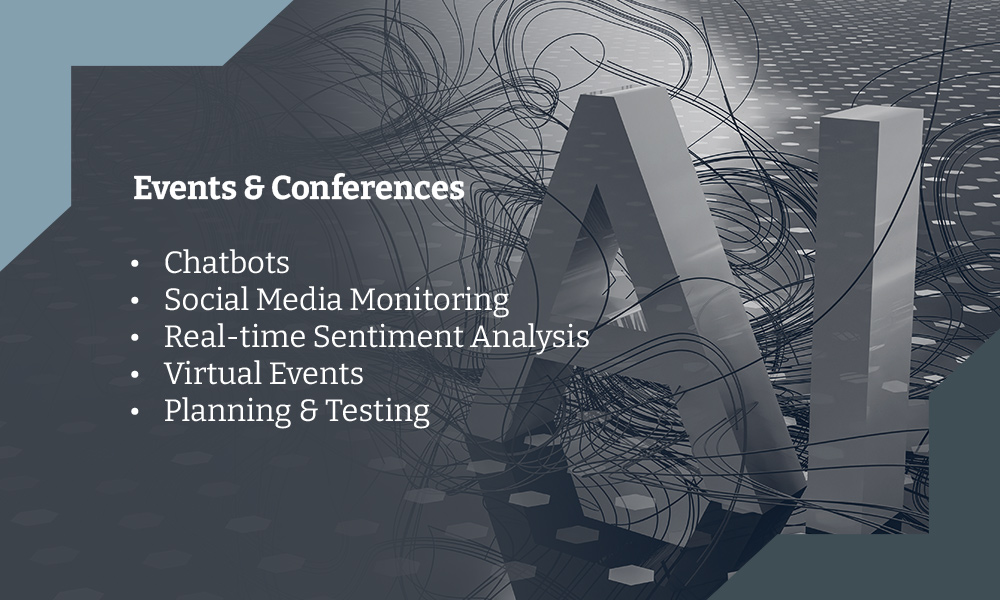
The challenges of event planning – from registration and ticketing to speaker management and content production – are now prime candidates for AI-powered automation. Chatbots are emerging as versatile assistants, addressing attendee inquiries, processing payments, and distributing tickets. This automation will not only accelerate tasks but could free up event staff to focus on value-added endeavors. Eventex, for example, has already incorporated ChatGPT into its event management platform. Behind the scenes, event logistics are becoming more streamlined by AI tools that manage speaker availability, venue capacities and attendee preferences – helping organizers be more efficient.

Innovative and tailored event experiences

AI can also create new, innovative event experiences. While Generative AI based chatbots can drive efficiencies, they can also act as virtual concierges at events, providing attendees with instant and tailored guidance. Social media monitoring becomes a powerful tool to gauge attendee sentiment in real time, which could enable rapid interventions and elevate the overall event atmosphere. Facial recognition technology is being deployed to read attendee emotions, providing a new source of real-time data that paints a vivid picture of overall feeling, albeit at the risk of invading the privacy of attendees. All of these and more can potentially be combined with data based on footfall, visitor flow, content engagement, conference attendance and more. All of this data can then be used to optimize event dynamics on the fly.

Similarly, the advent of virtual and augmented reality offers novel opportunities for hybrid events that engage both on-site and remote participants. Through real-time translation of speeches and transcripts, audiences can be extended worldwide while on the ground, participants can be engaged more actively and creatively.

AI in set design testing becomes an agile playground for organizers, who can experiment with various layouts and ideas in a low-cost, nimble fashion. This innovation will help to precisely curate F2F experiences that cater to attendees’ needs and preferences.

Conclusion

Utilizing cutting-edge data analytics, seamless automation, and new innovations, AI is reshaping the landscape of events, transcending them beyond conventional gatherings. Participants can take part in captivating and tailored experiences, while event organizers have an opportunity to benefit from enhanced efficiencies and the invaluable insights that support an ongoing process of improvement.

Despite the continued integration of AI, the bedrock of success for any event remains rooted in authentic human connections, rendering the industry more robust against AI disruption.

As event organizers continue to amass operational efficiencies and AI technologies enhance the value proposition for attendees, the sector remains an attractive area to explore from an investment perspective.

We look forward to continuing the conversation as the AI-story unfolds. If you have any queries or would like to have an in depth discussion on this topic or the broader market please Contact us. Our next AI article delves into the world of Software Development.

AI-volution | Legal & Compliance Technology

AI-volution | The unfolding story Legal & Compliance Technology

Authors:  Scott Mozarsky (Co-CEO & Managing Director)

Generative AI represents the next, and potentially most meaningful, key stage of Artificial Intelligence impacting the legal market. Generative AI ushers in a new era of efficiency involving automating routine tasks, enhancing legal research, and reshaping how lawyers construct arguments. Its potential to unlock unprecedented insights, streamline contract management, and predict legal outcomes heralds a transformative journey that promises to redefine the legal landscape for lawyers and clients alike.

History of AI in the Legal Industry

AI has already had an undeniable impact on the legal industry. There have been several pivotal stages, from eDiscovery Technology Assisted Review (TAR) and Litigation Analytics to Document Automation and Contract Analytics, that are important to understand when considering the impact that we anticipate Generative AI will have on this market.

The legal world saw its first glimpse of AI’s potential back in 2005 with eDiscovery TAR, which introduced a future where artificial intelligence could perform document review by detecting patterns in documents, effectively optimizing the tedious discovery process. TAR has been a critical driver of eDiscovery ranging up to becoming a $20B industry. Despite the subsequent innovations, across the market TAR remains the largest and most successful example of AI’s impact on the legal market.

Fast forward to 2012, and the legal market began to witness the rise of litigation analytics. Litigation analytics involved leveraging AI to detect patterns in data coming out of dockets, and case law to deliver profound insights and analytics on law firms, companies, and judges. These analytics are used for business and practice of law purposes. At first, the market was dominated by companies like Bloomberg Law, Docket Alarm and Lex Machina, but now a diverse range of players, from established companies to nimble startups, offer litigation analytics.

The mid-2010s marked a period of transformation through document automation. Before the era of Generative AI, we witnessed automated form completion based on decision trees and app-driven expert systems. Neota Logic and LegalZoom were early disruptors across both B2B and B2C, while Legalmation led the way in providing automation of pleadings in litigation. Since then, no-code/low-code platforms have become increasingly popular, allowing users to deploy software applications without needing a technical background.

The impact of AI extended to contract analytics, encompassing everything from pre-execution contract analysis to contract lifecycle management. Pattern recognition AI technology, effectively the early TAR on steroids, laid the foundation for contract analytics. Not limited to just legal use cases, contract analytics also ventured into compliance and front of the house use cases. A surge in capital raises during 2019-2021, and early 2022 has led to inevitable market consolidation.

Generative AI: Shaping the Future

The arrival of Generative AI back in 2022 heralds a new era of efficiency and effectiveness for legal professionals. Lawyers can leverage AI to handle repetitive and lower-end tasks, freeing up invaluable time and resources for higher-complexity, value-added work. In-house legal groups are increasingly turning to AI and tech-enabled solutions instead of relying on outside counsel. These advancements are now bearing fruit for early adaptors.

Internet browsers and the World Wide Web popularized the Internet for most people, and that development transformed whole industries, including law. In a similar way, Generative AI is the first exposure that most people have to powerful AI tools. Generative AI is just as disruptive. It is already changing what legal services law firms offer, how they price services, and what tasks corporate legal departments can handle in-house.

Ed Walters, Chief Strategy Officer, vLex

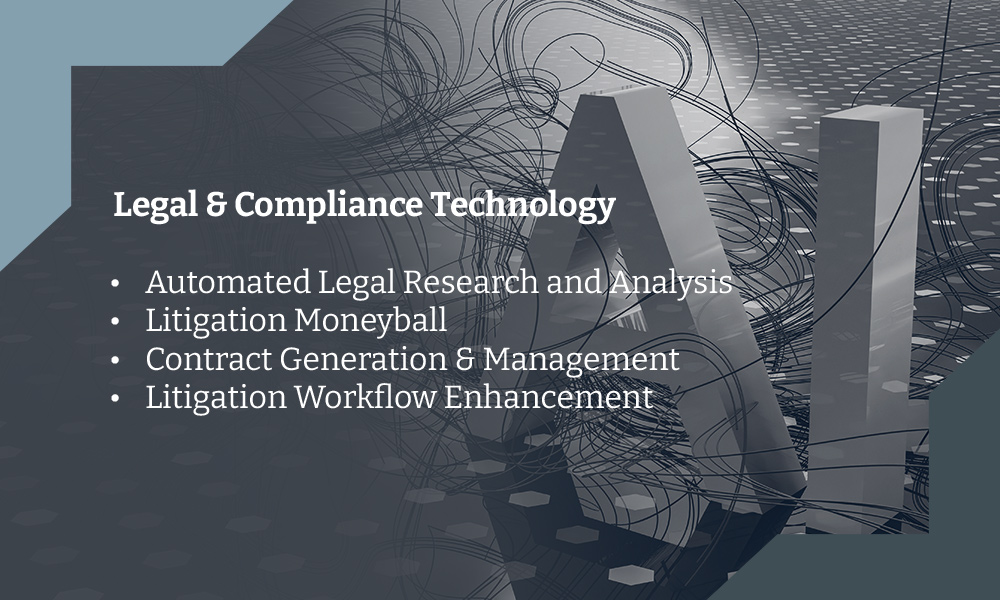
Automated Legal Research and Analysis

Generative AI possesses the unparalleled ability to process vast volumes of data faster and more accurately than humans. It can extract relevant information, answer questions, and build robust legal arguments.

Litigation Moneyball

Legal professionals can use Generative AI to analyze data to identify high-value clients, predict likely outcomes and behaviors, and recommend case strategies and settlement analysis. This revolutionary technology is already transforming areas such as personal injury, class action, and mass torts.

Contract Generation and Management

Generative AI streamlines the process of drafting and negotiating contracts. It provides invaluable insights that have the potential to standardize certain contract types across the market.

Litigation Workflow Enhancement

The benefits of Generative AI extend to AI-generated case law summaries, accelerated document review and summarization, deposition preparation, and regulatory compliance. It even takes on tasks like automated transcription, brief preparation, and formatting.

Conclusion: Embracing the AI-Powered Future 

While we stand at the threshold of Generative AI’s influence in the legal market, its accuracy and adoption are still in the early stages. Yet, the trajectory is clear. Generative AI is poised to transform workflows, enhance efficiency, and empower lawyers to focus on the more strategic aspects of their profession. In the end, the synergy between human expertise and artificial intelligence is the way forward in the legal world.

M&A Role

Given the anticipated pace of transformation and the increasing adoption of Generative AI, we expect M&A to play a pivotal role in the legal market as firms look to gain a competitive edge. The table below includes AI-related transactions in 2023, which highlights this trend.

We look forward to continuing the conversation as the AI-story unfolds. If you have any queries or would like to have an in depth discussion on this topic or the broader market please Contact us. Our next AI article delves into the world of Events and Conferences.